



Defence simulation marketing breaks most of the rules marketers learn elsewhere. Your buyers rarely post on LinkedIn and are certainly not on Instagram. A deal can take years. Some of your best work can never be shown, and the trade show you book this year might produce the contract you sign in three years’ time.
Before founding Pulso Social Marketing, I led European marketing for a defence simulation and training technology company, covering more than 15 countries. I ran the trade show programme, led their digitalization by implementing their CRM and building their online demand generation programme, for a market where the usual playbook mostly doesn’t apply.
This article is what I’d tell any defence or dual-use technology company starting to take marketing seriously: what works, what doesn’t, and what you should never publish. It stays at the level of strategy. Nothing here is technical, and nothing touches export-controlled information.
Long sales cycles: plan in years, measure in stages
Defence sales cycles often run for years, from a capability need to a budget line, a tender, an evaluation and a contract. Marketing’s job is to make sure your company is known and trusted before the requirement is written. Measure progress by account and by stage, because monthly lead counts will completely mislead you.
A simulation or training system is never bought on impulse. A need is identified, someone has to fund it, procurement rules decide how it is bought, and several people with very different priorities have to agree. Instructors care about training value. Engineers care about integration. Programme managers care about risk and schedule. Procurement cares about compliance and price.
By the time a tender is published, most of the thinking has already been done. If the people who shaped the requirement have never heard of you, your bid starts behind. That is why defence marketing is mostly about the years before the tender: being visible to the right few hundred people, consistently, with a message they find credible.
This changes how you should measure marketing. A dashboard of monthly leads will look poor most months and then suddenly brilliant. More useful indicators:
- Named target accounts you are actively in contact with
- Meetings and demos with the right roles, not just the right organisations
- Invitations to tender, or to pre-tender market engagement
- Shortlists and frameworks you are on
- Time from first contact to first meeting, tracked over the year
None of this works without a disciplined CRM to track the pipeline. In a market this small, every contact from a trade show, a webinar or a partner introduction is valuable for years. If it lives in someone’s inbox, it leaves when they do or gets buried.
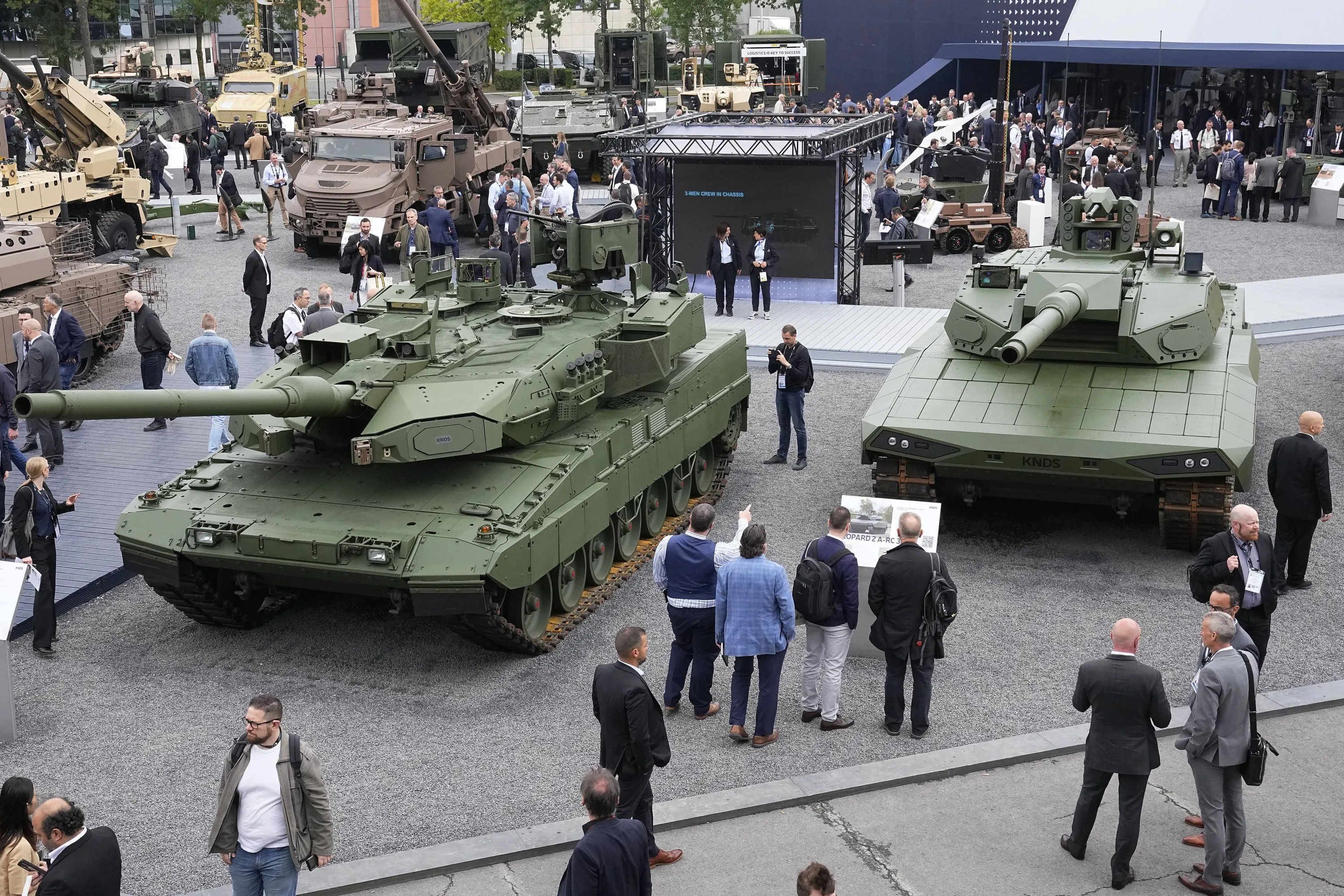
Trade shows: where defence buyers actually meet suppliers
Trade shows are still the most important marketing channel in defence. DSEI in London and Eurosatory in Paris alternate years and bring programme teams, procurement officials and national delegations to one place. Their value comes from the meetings you book weeks in advance, not from the stand itself.
| Show | Location | Next edition | Scale |
|---|---|---|---|
| DSEI | ExCeL London, UK | 7–10 September 2027 | 1,600+ exhibitors, 45,000+ attendees, 90+ countries |
| Eurosatory | Paris Nord Villepinte, France | June 2028 (held every two years; 2026 edition ran 15–19 June) | 2,100+ exhibitors from 64 countries registered for 2026 |
| I/ITSEC | Orange County Convention Center, Orlando, USA | 30 November–4 December 2026 (held every year) | Close to 16,000 participants and 502 exhibitors in 2025, attendees from 55 countries |
| DSET | Cheltenham Racecourse, UK | 2027, dates TBC (held every year; 2026 edition ran 23–25 June) | 2,000+ delegates from 44 countries |
For simulation and training companies, the specialist events matter as much as the big four. ITEC in Europe and I/ITSEC in Orlando gather the instructors, training managers and simulation engineers who are often your real end users.
What made the difference for us, show after show:
- Book the meetings before you book the hotel. Six to eight weeks out, contact your target accounts and partners with a specific reason to meet. A stand with an empty diary is an expensive place to stand.
- Decide whether you need a stand at all. A national pavilion, a partner’s stand or a well-planned meeting schedule can deliver more for a smaller company than its own booth.
- Plan the demo with compliance in the room. Check with your export compliance lead what can be shown on the stand, and to whom, before anything is shipped.
- Follow up within a week. Every conversation goes into the CRM with notes, the role of the person and the next step. Contacts made at DSEI may only turn into a tender two years later.
- Use the year in between. With DSEI and Eurosatory alternating, there is a major show every year. The off-year is when your content, partner work and direct outreach keep the conversations going.
Two shows prepared properly beat five where you just hand out business cards.
Compliance-aware content: what works and what’s off-limits
Good defence content talks about problems, outcomes and capability at a level anyone could read. It never includes controlled technical data, customer programmes or imagery you don’t have clearance to use. Every technical piece should pass an export compliance and customer-approval check before it goes live.
Dual-use items are, in the European Commission’s words, “goods, software and technology that can be used for both civilian and military applications”, and EU law controls their export, brokering and technical assistance. Military items have their own national controls on top.
What surprises most marketers is how wide “export” can be. UK guidance says that showing controlled technology in a presentation to an overseas audience can require a licence, and so can a recording viewed abroad. Planning to publish something doesn’t make it public domain. A webinar, a demo video or a detailed white paper can all become a compliance question.
| What works | What’s off-limits |
|---|---|
| The training or operational problem you solve, in plain language | Technical specifications, performance data or design detail beyond what is already public |
| Outcomes at a general level: faster training, lower cost, less time on live equipment | Customer names, programmes or contract details without written approva |
| Thought leadership on trends: synthetic training, interoperability, procurement reform | Photos or video from customer sites, exercises or bases without clearance |
| Approved, anonymised case studies | Testimonials you can’t attribute, or quotes put in a real person’s mouth |
| Your people, values, certifications and partnerships | Anything marked confidential, classified or “for official use” |
| Event presence, talks and published papers already cleared for release | Demo footage that reveals more than your compliance lead has signed off |
In practice, this means a content workflow with a compliance step built in. Marketing drafts. Engineering checks accuracy. Export compliance checks what can be said and shown. Where a customer is involved, they approve too. It takes longer, so plan your calendar around it.
The upside is that the best defence content rarely needs technical detail anyway. Buyers want to know you understand their problem, that you’ve solved it before and that you can be trusted. You can show all three without a single specification.
Most of your leads aren’t on social media
In defence, many of the people who matter keep a minimal public profile or none at all. Leads come from trade shows, partners and prime contractors, tender portals, industry associations, referrals and search. LinkedIn helps with credibility and with the industry side of the market, but it is rarely where a defence deal starts.
This was one of the clearest lessons from my years in the sector. Serving personnel and many civil servants are cautious online for good reasons. Their profiles often say little about their role or unit, if they exist at all. You can’t target them with a LinkedIn campaign, and you shouldn’t try to find them through workarounds.
Where the pipeline actually came from:
- Trade shows and specialist conferences, by a wide margin
- Running our own internal conferences, with only a few handpicked high profiles from our key accounts: a place to discuss simulation and training technology and a place for key defence profiles to network and share ideas.
- Partners and prime contractors, who bring smaller suppliers into larger programmes
- Public tenders, published on portals such as the UK’s Find a Tender and the EU’s TED
- Industry associations and national defence clusters, which run supplier days and briefings
- Referrals from existing customers and from people who changed jobs and took your name with them
- Search, because engineers and programme staff still research suppliers on Google before they ever make contact
Social media still has a role. It shows you are active and credible when someone checks you out after a show. It works well for reaching primes, integrators and other companies in the supply chain. It also matters for hiring, which in defence is its own challenge.
What it won’t do is replace the slower work: a website that answers a technical buyer’s first questions, a CRM full of real relationships, and a presence at the events where decisions are discussed.
Background checks: expect to be vetted, and plan for it
Defence buyers check suppliers thoroughly, and the checks extend to people. Staff who handle sensitive information may need formal security clearance, which takes time. Your marketing team and any agency you hire should expect NDAs, limited access and questions about who they are, and should be comfortable working that way.
In the UK, people working with government assets go through national security vetting. It starts with the Baseline Personnel Security Standard (BPSS), the pre-employment screen, and rises through Security Check (SC) for regular access to SECRET material to Developed Vetting (DV) for TOP SECRET. Other countries run their own equivalents.
For marketing, this has practical consequences:
- Onboarding takes longer. A new hire or contractor may not see certain material for weeks or months. Plan launches and campaigns with that delay built in.
- Not everyone sees everything. Marketing often works one step removed from programme detail. That is normal and healthy. A good brief gives marketing what it needs to tell the story, and nothing more.
- Your agency will be checked too. Expect questions about ownership, staff, data handling and where work is done. An agency that bristles at an NDA or a supplier questionnaire is the wrong agency for this sector.
- Your company is being assessed as a whole. Buyers look at ownership, financial stability, security practices and track record before they shortlist you. Marketing can help by making that information easy to find and easy to trust.
The last point is the one most companies miss. Due diligence starts long before anyone sends you a questionnaire. When a programme team first looks you up, your website and public profile are the first check you’ll go through.
Credibility markers: Cyber Essentials and the signals buyers look for
In defence, trust is built on proof you can verify. Certifications such as Cyber Essentials, ISO 9001 and ISO 27001, defence quality standards, trade association membership and prime contractor partnerships all tell a buyer you are a safe choice. Make them visible on your website and in every proposal.
Cyber Essentials is the UK government’s recommended minimum standard of cyber security, backed by the National Cyber Security Centre. It comes in two levels: Cyber Essentials, which combines self-assessment with an independent check, and Cyber Essentials Plus, which adds hands-on technical testing. The NCSC notes that a growing number of organisations require suppliers to be certified before they can bid. For UK defence work, MOD contracts have included Cyber Essentials requirements since 2016, with the level set contract by contract.
If you want UK defence business, treat it as a starting point. It is relatively quick to achieve, and not having it can rule you out before anyone reads your proposal.
Other markers worth showing, where they apply to you:
- ISO 9001 for quality management and ISO 27001 for information security
- AQAP 2110, NATO’s quality assurance requirements for defence contracts
- An NCAGE code, which identifies you as a supplier in NATO supply systems
- Trade association membership, such as ADS in the UK or GICAT in France
- Framework agreements and approved supplier status
- Partnerships with prime contractors you can name publicly
Where to put them matters as much as having them. A short certifications and compliance page on your website, a line in your email signature, a slide in every capability deck and a section in your proposal template. Buyers doing due diligence shouldn’t have to ask.
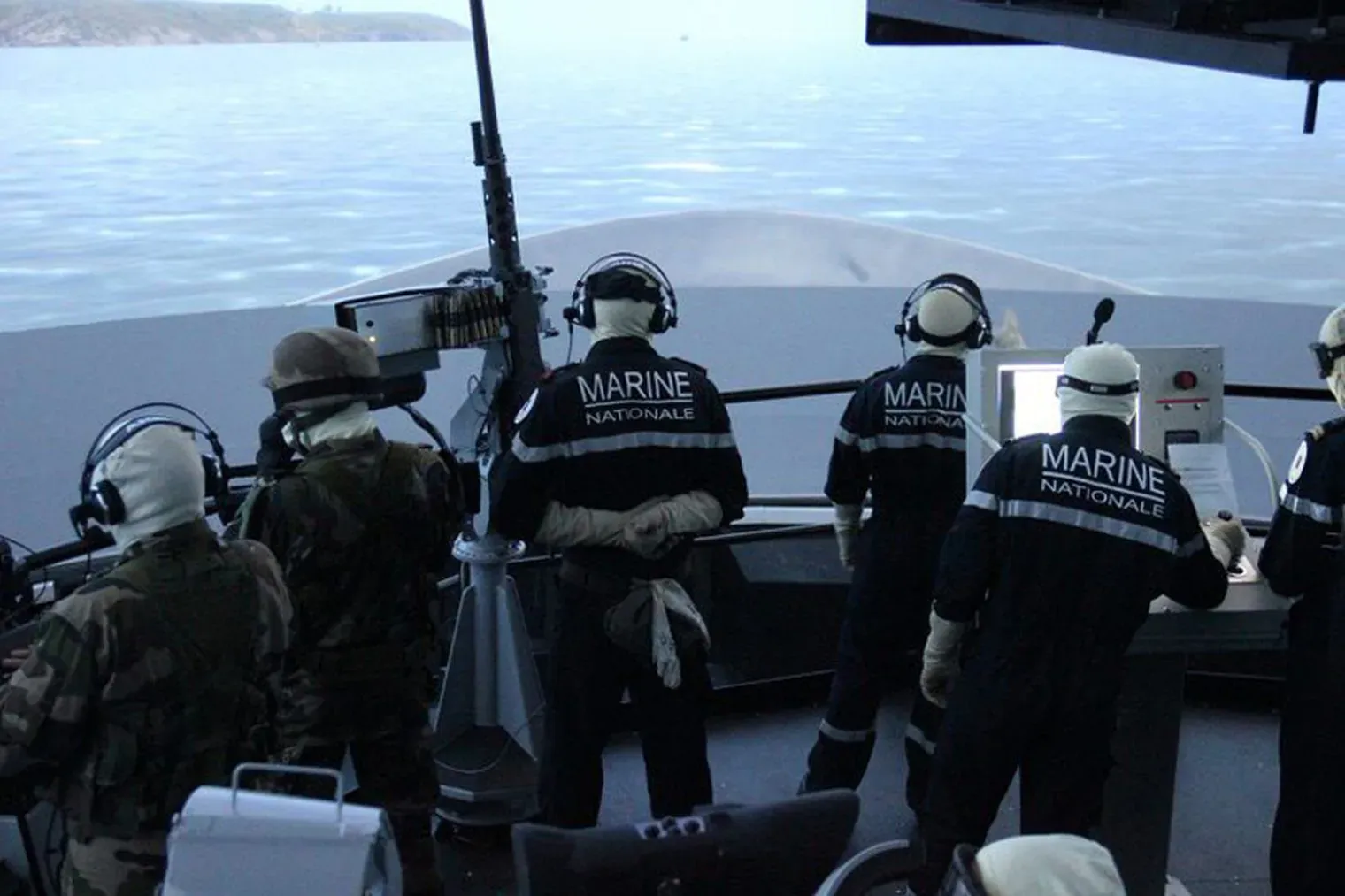
Defence simulation marketing with Pulso Social Marketing
Pulso Social Marketing helps defence, simulation and dual-use technology companies build marketing that fits the sector: long-cycle demand generation, trade show programmes, compliance-aware content and a CRM that holds years of relationships. The founder who has done this inside the industry leads every project.
We know this market from the inside. Our founder led European marketing for a defence simulation and training technology provider across more than 15 countries, running trade shows, CRM, demand generation and new market entry. We understand procurement-led buying, multiple stakeholders and the care needed with sensitive information.
What we do for defence and dual-use companies:
- Positioning and messaging that works for end users, engineers and procurement
- Trade show planning, pre-show outreach and structured follow-up
- Website, SEO and content built around a compliance review step
- CRM and pipeline set-up in HubSpot or Salesforce, tracked by account and stage
- Thought leadership and capability material that stays on the right side of the line
We are used to NDAs, supplier questionnaires and working without access to everything. There are no account managers in between. You work directly with senior people, in English, French or Portuguese. See how we approach B2B digital marketing, or read our defence sector page.
Book a free consultation
Preparing for DSEI 2027, or trying to turn a long sales cycle into a predictable pipeline? Book a free, no-obligation call with the founder. We’ll look at your target accounts, your event calendar and the content you can safely publish.
Book your free consultation or give us a call on (+351) 915 786 022
About the author: Audrey Zarlenga
Founder of Pulso Social Marketing. More than 10 years in international marketing leadership across France, Australia, the UK and Portugal, including a senior European marketing role in defence simulation and training technology covering more than 15 countries. Associate of APPM. Based in Funchal. More about Audrey
FAQ
Questions fréquentes
What is defence simulation marketing?
It is the marketing of simulation and training technology to armed forces, defence ministries, prime contractors and training organisations. It combines long-cycle B2B demand generation with trade shows, compliance-aware content and account-based work aimed at a small number of buyers.
Can defence companies use social media for marketing?
Yes, but with realistic expectations. Social media builds credibility, reaches the supply chain and supports hiring. Many defence decision-makers keep a minimal public profile, so most leads still come from trade shows, partners, tenders and referrals.
What content is off-limits for defence and dual-use companies?
Anything containing controlled technical data, customer or programme details without approval, imagery from customer sites without clearance, and anything confidential or classified. Showing controlled technology to an overseas audience, even in a webinar, can require an export licence. Have technical content checked by export compliance before publishing.
Do defence suppliers need Cyber Essentials?
For UK government and MOD work, Cyber Essentials or Cyber Essentials Plus is often a contract requirement, with the level set per contract. Even where it isn't required, it is a fast, recognised signal that you take security seriously.
Which defence trade shows should we attend?
For Europe, DSEI in London (next in September 2027) and Eurosatory in Paris (next in 2028) are the two largest. Simulation and training companies should also look at specialist events such as ITEC and I/ITSEC. Two shows prepared properly usually beat several attended lightly.