

Europe is rethinking how it protects itself, who it partners with and where it invests.
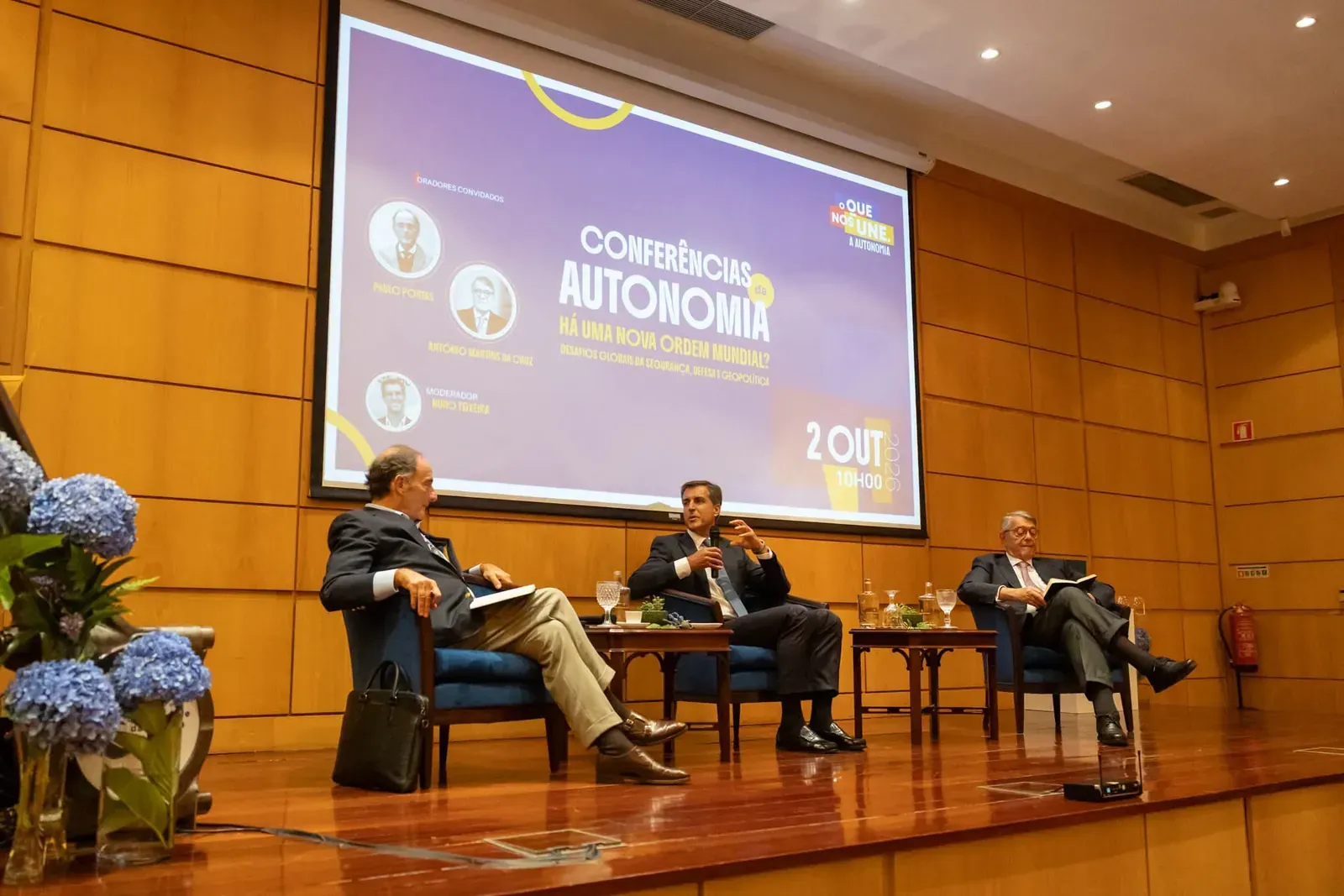
On 2 October 2026, we attended a session of the Conferências da Autonomia (Autonomy Conferences) at the Electricity Museum – Casa da Luz in Funchal. Titled “Is there a new world order? Global challenges in security, defence and geopolitics”, it brought together former Deputy Prime Minister Paulo Portas and former Minister of Foreign Affairs António Martins da Cruz, moderated by lawyer Nuno Teixeira. The conference series is part of the celebrations marking 50 years of Madeira’s regional autonomy.
The central message was clear. The world has moved from a system of alliances, built on treaties, agreements and shared rules, to a system of powers, where each country’s military strength sets the terms. For Europe, that means facing decisions it has put off for decades.
Four themes dominated the debate. Here is what was said, and what it means for companies working in the European defence sector.
1. The end of the automatic US guarantee
For almost 80 years, European security rested on an American guarantee. Paulo Portas summed up the change in one line: “The America of before is not coming back.”
Europe is now looking for reliable partners elsewhere, and Canada is the most natural fit. In 2026, it became the first non-European country to join SAFE (Security Action for Europe), the EU instrument that offers up to €150 billion in loans for countries to buy defence equipment together. Canadian companies can now bid for contracts that were previously open only to European suppliers.
What it means for industry: procurement in Europe is becoming more joint, more cross-border and more open to selected partners. That brings more opportunities, and more competition.
2. Defending Europe after the invasion of Ukraine
Portas attributed the war to Russian imperialism and praised Ukraine’s resistance, which has held even after the loss of US military supplies. His warning was direct: if Putin is not stopped, he “will be tempted to cross the border of the European Union and NATO” through the Baltic states.
The speakers also raised the worst-case scenario. How would Europe respond if Russia used tactical nuclear weapons?
At the same time, Ukraine has built one of the largest defence capabilities on the continent, in the middle of a war. Under SAFE, Ukraine can also take part in joint procurement with EU countries.
What it means for industry: speed now matters as much as scale. Ukraine has shown how fast capability can be developed under pressure, and European buyers have noticed.
3. The Middle East and the Gulf: crises with no way out in sight
Both speakers argued that the conflict in the Gulf, which has shifted to the Strait of Hormuz, has no military solution. In the Middle East, they saw no solution where Israel is concerned.
Added to the war in Ukraine, these crises have consequences Europe feels directly: higher energy prices, the risk of shortages, inflation and currency instability.
What it means for industry: pressure on supply chains, costs and delivery times. Resilience is becoming a selling point in its own right.
4. An Europe facing its own decisions
France continues to push for strategic autonomy in defence and foreign policy. Negotiations on the EU’s 2028–2034 budget put more of Brussels’ own resources and the enlargement of the Union on the table.
All of this is happening at a time of growing political polarisation, just when these decisions need consensus.
What it means for industry: funding priorities for the next decade are being set now. Companies that follow these negotiations will understand where demand is heading before it shows up in tenders.

Portugal, Madeira and the Atlantic
As the speakers pointed out, Portugal is European in its politics and economy, but Atlantic in its strategy. The archipelagos, Madeira and the Azores, are part of the answer Europe needs to build.
Defence is not only decided in Brussels, Paris or Berlin. It is also shaped from the Atlantic edge of Europe.
What Europe’s defence shift means for defence marketing
The decisions taken in the next few years will shape European security for decades. Companies with solutions, expertise and the capacity to respond now have a chance to leave their mark. Being good is not enough. Buyers and partners also need to find you, understand you and trust you.
A few practical points stand out for defence companies:
- Think European, not only national. Joint procurement means your next partner or buyer may sit in another member state. Visibility across borders, and in several languages, matters.
- Expect more competition. New partners such as Canada, a battle-tested Ukrainian industry and dual-use tech companies are all entering the same space. Clear positioning makes the difference.
- Build credibility over the long term. Defence sales cycles are long and involve many stakeholders. Consistent thought leadership, a strong presence at events such as Eurosatory and DSEI, and a well-managed CRM keep you in the conversation between tenders.
- Respect the rules of the sector. Export controls and information-handling requirements shape what can be said in public. Good defence marketing works within those limits, not around them.
About Pulso Social Marketing
Pulso Social Marketing is a B2B digital marketing agency based in Funchal, Madeira, working in English, French and Portuguese. Our founder, Audrey Zarlenga, previously held a senior European marketing role at ST Engineering Antycip, a defence simulation and training technology company, covering more than 15 European countries, from major trade shows to CRM implementation and lead generation. That experience shapes how we approach marketing for defence companies: long sales cycles, technical audiences, multilingual markets and strict rules on what can be shared. Find out more about our defence marketing services.
Europe is redefining how it protects itself, who it allies with and where it invests. What role does your organisation want to play in this new Europe?