

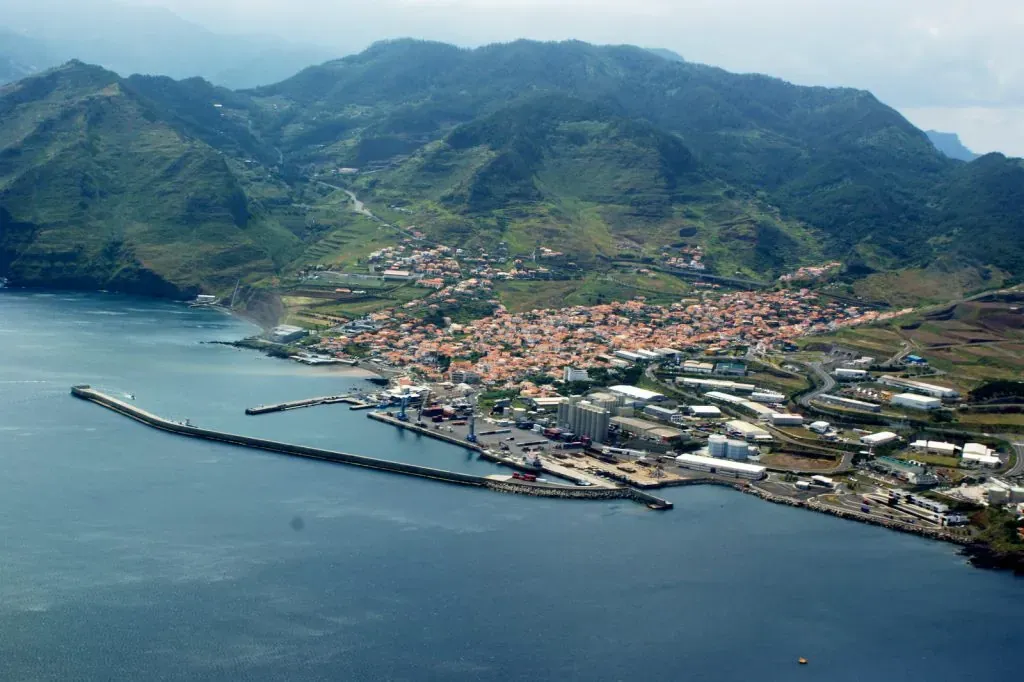
More international companies are choosing Funchal as a base. Some come for the tax framework. Some come for the lifestyle, the time zone or the talent. Almost all of them face two questions: how do we set up properly, and how do we win business from here?
This guide answers both. The first half walks you through the Madeira Zona Franca step by step: what it is, who qualifies, what it costs and what you must do to keep the benefits. The second half covers marketing: the local market, the language mix, reaching mainland Portugal and the EU, and the networks that matter. It is written from the ground by a founder-led marketing agency in Madeira.
In this guide, we’ll look at:
- Why international companies choose Madeira
- The Zona Franca explained
- Requirements: jobs, investment and ceilings
- Step by step: setting up in the IBC
- What it really costs
- The 2026 deadline and what comes next
- Common mistakes to avoid
- Moving people, not just a company
- Marketing your business from Madeira
- Free international marketing consultation
- FAQs
Why international companies choose Madeira
Madeira combines EU membership, Portuguese law, a reduced tax regime approved by the European Commission, and a quality of life few business locations can match. For service, technology and trading companies with international clients, it is one of the most competitive bases in the EU.
Madeira is an autonomous region of Portugal and an outermost region of the EU. That status is the legal basis for its tax regime: the EU recognises the island’s structural constraints, such as insularity and a small internal market, and allows targeted state aid in return.
In practice, a Madeira company is a normal Portuguese company. It gets a Portuguese VAT number, access to all EU directives and regulations, and Portugal’s network of double taxation treaties. It is not an offshore structure, and it is not treated as one.
Beyond tax, companies cite the time zone (the same as Lisbon and London), a growing international community, and direct flights to major European cities. The island sits about 900 km south-west of Lisbon, roughly three hours by air from most major European capitals.
The Zona Franca explained
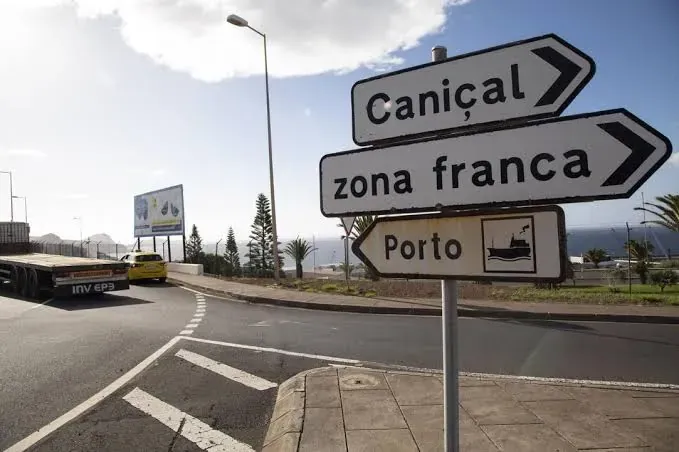
The “Zona Franca da Madeira” is the common name for the International Business Centre of Madeira (IBC, also CINM or MIBC). It is a licensing regime, not a physical zone for most companies: once licensed, qualifying companies pay 5% corporate tax on eligible income, plus a set of withholding and local tax exemptions.
The regime is managed by SDM (Sociedade de Desenvolvimento da Madeira), the official concessionaire, on behalf of the Regional Government. All licence applications go through SDM.
Who can apply
Eligible activities are set by Article 36-A of the Portuguese Tax Benefits Statute. They cover most international services, including:
- International trading
- E-business, technology and telecommunications
- Management and consulting services
- Ownership and management of intellectual property
- Real estate investment activities
- Holding companies (SGPS)
- Industrial production and warehousing in the Industrial Free Trade Zone
- Shipping, through the MAR international ship register
Excluded: pure financial services offered to third parties, such as banking, insurance and brokerage, do not qualify for the tax benefits.
What you get
| Benefit | What it means |
|---|---|
| 5% corporate tax | On qualifying income until 31 December 2033, within income ceilings |
| Dividends | No withholding tax on dividends to non-resident shareholders, unless they sit in a Portuguese blacklisted jurisdiction |
| Interest, royalties, services | No withholding tax on these payments worldwide |
| Capital gains | Exemption on capital gains paid to shareholders outside blacklisted jurisdictions |
| Participation exemption | Available for dividends and gains from subsidiaries (10% held for 12 months, conditions apply) |
| Stamp duty and local taxes | 80% exemptions, including municipal property tax, where conditions are met |
| Treaties and EU access | Portuguese VAT number, EU directives and Portugal’s double taxation treaties |
The rule most people miss
For international services companies, the 5% rate applies only to profits from operations with non-resident entities or other IBC companies. You can still trade with Portuguese companies, but that income is taxed at the general Madeira corporate rate, which SDM currently states as 13.3%.
This matters for your business plan and your marketing plan. Where your clients sit decides which rate you pay. Industrial companies in the Industrial Free Trade Zone are treated differently and can benefit on sales to Portuguese residents too.
Please note: This is a practical guide, not tax or legal advice. The figures here were checked against SDM’s official website and other published sources on 28 September 2026. Rules change, and your home country’s tax rules (for example controlled foreign company, permanent establishment and transfer pricing rules) can change the outcome. Always confirm your position with qualified advisers in Portugal and in your shareholders’ country of residence.
Requirements: jobs, investment and ceilings
To keep the 5% rate, your company must show real activity in Madeira. You either create one to five jobs within six months and invest at least €75,000 in fixed assets within two years, or create six or more jobs within six months. The rate then applies up to an income ceiling linked to headcount.
Substance: two routes
- Route A: create 1 to 5 jobs in the first 6 months of operation, and invest at least €75,000 in tangible or intangible fixed assets in the first two years.
- Route B: create 6 or more jobs in the first 6 months of operation. No minimum investment applies.
Income ceilings
The 5% rate applies to annual taxable income up to a ceiling. Above it, standard rates apply.
| Jobs created | Minimum investment | Taxable income ceiling |
|---|---|---|
| 1 - 2 | €75,000 | €2,730,000 |
| 3 - 5 | €75,000 | €3,550,000 |
| 6 - 30 | – | €21,870,000 |
| 31 - 50 | – | €35,540,000 |
| 51 - 100 | – | €54,680,000 |
| More than 100 | – | €205,500,000 |
Annual benefit caps
On top of the ceiling, the total tax benefit each year is capped at one of: 20.1% of gross value added, 30.1% of labour costs, or 15.1% of turnover. For lean, high-margin companies, this cap is often the one that bites. Model it before you commit.
Step by step: setting up in the IBC
The process runs in nine steps: check eligibility, choose a structure, reserve a name, apply to SDM, incorporate, obtain the licence, set up operations, build substance and stay compliant. Most founders work with a local corporate services provider and a certified accountant from the start.
Step 1 – Check eligibility and your tax position
Confirm your activity is on the eligible list and that your client base fits the regime. Then check the structure against your home country’s rules. A 5% rate in Madeira means little if your shareholders’ country taxes the profits anyway.
Tip: Ask your adviser to model three scenarios: all-international clients, a mix with Portuguese clients, and your five-year growth plan against the ceilings.
Step 2 – Choose your legal structure
Four options are available:
- Lda. (private limited company): one shareholder possible, minimum capital €1 per shareholder, managed by at least one manager. The most common choice.
- S.A. (share company): one shareholder possible, minimum capital €50,000, board of directors (one director if capital is €200,000 or less).
- Branch of an existing company: no minimum capital, but legal representation in Madeira is required.
- SGPS: a pure holding company, as an Lda. or S.A., limited to managing shareholdings.
Shareholders can be individuals or companies, Portuguese or foreign, and can also act as managers.
Step 3 – Reserve your company name
Before incorporation, request a name approval certificate and a provisional identification card from the National Company Registrar (RNPC).
Tip: Check that the matching domain and social handles are free at the same time. Changing a registered name later is slow and costly.
Step 4 – Submit the licence application to SDM
The application is written in Portuguese, filed in two copies with SDM and addressed to the Regional Government of Madeira. It can be made for a new company, an existing company in Portugal or abroad, or a branch. It must include:
- Company name and address
- The activity and its NACE code
- Total investment value
- Number of jobs to be created
All supporting documents must be translated into Portuguese and legalised. SDM publishes sample application forms in its document library.
Step 5 – Incorporate the company in Madeira
IBC companies are incorporated through the Private Deeds Registry Office, with full exemption from registry fees and notary costs. The company’s head office must be in Madeira.
Step 6 – Obtain the licence
Once your application is approved, the licence is granted when you provide proof that the company has been formed and registered. This is the milestone that secures the 5% rate. Incorporation alone does not.
Tip: Treat 31 December 2026 as a legal cut-off, not a target. Local providers advise incorporating well before mid-December to leave room for processing.
Step 7 – Set up operations
- Register for corporate tax and VAT with the Portuguese Tax Authority.
- Open a business bank account. Allow time for compliance checks.
- Appoint a certified accountant (contabilista certificado), which Portuguese companies need.
- Secure a real office or workspace in Madeira.
Step 8 – Build substance
Hire within six months and, on Route A, make your €75,000 investment in fixed assets within two years. Jobs must be real, local and ongoing. Keep payroll, contracts and asset invoices organised from day one: they are your evidence.
Step 9 – Stay compliant every year
- Pay the annual SDM fee.
- Monitor taxable income against your ceiling and the annual benefit caps.
- Keep records showing management, decisions and activity genuinely happen in Madeira.
- Separate income from Portuguese clients in your accounts, as it is taxed differently.
What it really costs
SDM’s own fees are low: €1,000 to apply and €1,800 a year for a services company. The real cost is substance. One local provider estimates a realistic annual budget of about €22,500 to €35,500 once accounting, an employee, an office and corporate maintenance are included.
| Item | Amount | Notes |
|---|---|---|
| Application fee | €1,000 | One-off, set by Regional Government order |
| Annual fee, services company | €1,800 / year | Paid to SDM |
| Annual fee, SGPS | €1,800 + 0.5% of prior-year profit above €1M | Variable part capped at €30,000 |
| Incorporation | Registry and notary fees exempt | Translation, legalisation and adviser fees still apply |
| Minimum investment (Route A) | €75,000 | In fixed assets, within two years |
| Realistic running budget | ≈ €22,500 - €35,500 / year | Estimate incl. accounting, one employee, office and maintenance |
A common way to lower the real cost: the founder relocates and takes one of the job slots as a salaried manager. Whether that works for you depends on your personal tax position, so take advice.
The 2026 deadline and what comes next
31 December 2026
Last date to obtain an IBC licence under the current regime and lock in the 5% rate on qualifying income until 31 December 2033.
The current framework is often called Regime IV. The Portuguese State Budget for 2026 extended its benefit horizon from 2028 to 2033 for entities licensed by the end of 2026. A successor regime is still under negotiation, and its terms are not yet agreed.
If you are seriously considering Madeira, the next three months matter. Start the adviser conversation now, not in December.
Common mistakes to avoid
- Choosing Madeira for the rate alone. Without genuine management and activity on the island, the structure is fragile.
- Ignoring the Portuguese-client rule. Services income from Portuguese clients is taxed at the general rate. Plan your client mix.
- Forgetting home-country rules. CFC, residency and permanent establishment rules can undo the benefit.
- Leaving it late. Translation, legalisation, banking and approvals all take time.
- Missing the substance deadlines. Six months for jobs, two years for investment. Put both in the calendar on day one.
- Setting up with no plan to win clients. A licence doesn’t bring revenue. You still need a go-to-market plan, which is where the second half of this guide comes in.
Moving people, not just a company
If you or your team are relocating, plan personal matters alongside the company: tax numbers, residency, healthcare, schools and personal tax. Getting these right is what makes substance sustainable.
- Tax number (NIF): every individual and company needs one. You’ll need it for contracts, banking and housing.
- Residency: EU citizens register locally; non-EU nationals need the right visa before moving. Rules have been changing, so check current requirements.
- Personal tax: Portugal has specific regimes for qualifying professionals relocating to the country. Eligibility is narrow, so get personal tax advice before you move.
- Hiring locally: Madeira has a growing pool of multilingual graduates and remote-work talent. The university and local networks are good places to start recruiting.
Marketing your business from Madeira
Once the company is set up, the challenge becomes winning clients. Madeira’s domestic market is small and tourism-led, so most international companies use the island as a base and sell to the UK, the EU and beyond. That requires a clear market choice, the right languages and a remote-first sales engine.
Understand the local market
2.4M – guests in tourist accommodation in 2025, a record
12.7M – overnight stays in 2025, up 8.3% on 2024
Q3 2025 – Portuguese residents overtook Germany as the top source market
Tourism drives the local economy: hospitality, property, transport, food and professional services. For an IBC company, local clients have an extra catch: services income from Portuguese clients falls outside the 5% rate. Most companies choose one of three plays:
- Madeira as a base. Run the company from Funchal, sell internationally. Most marketing happens off-island.
- Serving the island. Sell to hotels, developers and local businesses. Smaller market, deeper relationships.
- Hybrid. Use local work as proof, then scale internationally.
Get the language mix right
Localise rather than machine-translate, respect the formality of Portuguese business correspondence, and build your website multilingual from day one, with proper hreflang tags so search engines show each market the right page.
Reach the UK, mainland Portugal and the EU
- Use the time zone. Your working day matches Lisbon, London and Dublin. For UK buyers, that means an EU partner with no scheduling friction. Say so.
- LinkedIn for founder-led content and targeted outreach by country and sector.
- Search: SEO in each target language, plus Google Ads geo-targeted per country and language.
- A CRM with automation, so leads from several markets never slip through the gaps.
- Selective events: two or three trade shows a year, prepared properly, beat five where you just hand out cards.
Plug into the local networks
- ACIF-CCIM, the Chamber of Commerce and Industry of Madeira: founded in 1836, around 800 member companies, and the Enterprise Europe Network representative in Madeira since 2008.
- Startup Madeira, the regional incubator at Campus da Penteada, founded in 2016. Pulso Social Marketing was founded through its StartNow programme, so we know the network first-hand.
- SDM and the IBC community: peers facing the same set-up and growth challenges, and a natural source of partners and referrals.
- Universidade da Madeira: talent, research partners and public events such as Macaronight, European Researchers’ Night, where we took part in 2026.
Your first 90 days of marketing
Days 1–30: foundations
- Choose your play and write one clear positioning statement.
- Launch a fast, multilingual website with clear service pages.
- Set up Google Business Profile, LinkedIn and a CRM.
- Define three to five KPIs tied to pipeline, not followers.
Days 31–60: visibility
- Join one or two local networks and show up consistently.
- Announce your arrival in the regional press, in Portuguese.
- Publish founder-led content on LinkedIn every week.
Days 61–90: pipeline
- Launch targeted campaigns in your priority markets and languages.
- Start structured outreach to a named list of target accounts.
- Turn first results into a short case study. Double down on what converts.
Free international marketing consultation
Setting up in Madeira, or already here and ready to grow internationally? Book a free consultation with Pulso Social Marketing. You’ll speak directly with the founder, not a salesperson or an account manager.
What we’ll cover
- Your target markets and the right entry order
- Language plan: English, Portuguese, French
- Which channels will bring qualified leads first
- Quick wins for your website and LinkedIn
- Your 90-day marketing priorities
Who it’s for
- International companies setting up in Madeira
- IBC-licensed companies selling abroad
- Madeira businesses expanding to the UK, France or the EU
- B2B teams that want pipeline, not vanity metrics
Book your free consultation, in English, French or Portuguese. We reply within one business day.
About the author: Audrey Zarlenga
Co-founder of Pulso Social Marketing. More than 10 years in international marketing leadership across France, Australia, the UK and Portugal, in B2B SaaS, EdTech and manufacturing. Based in Funchal. More about Audrey
Bringing your business to Madeira?
Get the set-up right with your advisers. Then let us help you build the plan, the presence and the pipeline, in English, French and Portuguese.
FAQ
Frequently asked questions
What is the Zona Franca da Madeira?
It is the common name for the International Business Centre of Madeira (IBC, also CINM or MIBC), an EU-approved tax regime for companies licensed to run international activities from Madeira. Licensed companies can pay 5% corporate tax on qualifying income.
Do I need to market in Portuguese if I set up in Madeira?
It depends on who you sell to. International clients can be served in English. Local companies, public bodies and mainland Portuguese buyers expect native European Portuguese, not Brazilian Portuguese or machine translation.
What is the deadline to join the Madeira IBC?
Under the rules in force as of September 2026, companies must be licensed by 31 December 2026 to access the 5% rate on qualifying income until 31 December 2033. Incorporation alone is not enough: the licence is the decisive step.
Does the 5% rate apply to clients in Portugal?
For international services companies, no. The 5% rate applies to profits from operations with non-residents or other IBC companies. Business with Portuguese companies is allowed but taxed at the general Madeira rate, which SDM states as 13.3%.
How much does an IBC company cost to run?
SDM charges a €1,000 application fee and a €1,800 annual fee for services companies. Including accounting, an employee, an office and corporate maintenance, one local provider estimates a realistic running budget of roughly €22,500 to €35,500 a year.
Can I move an existing foreign company to Madeira?
Often, yes. Licences can be granted to existing companies in Portugal or abroad, to companies to be incorporated, and to branches of existing companies. EU companies may also be able to convert cross-border without liquidation. Take legal advice on the right route for you.